
Loan Against Property – A Plain-Language Guide
Learn how a loan against property works, what lenders typically offer on rates and loan-to-value, who is eligible, and estimate your EMI before you approach a bank or NBFC. SmartLoanLend is an informational site, not a lender.

Why Consider a Loan Against Property?
Key features of LAP, and what to weigh before you pledge your property
Usually Cheaper Than Unsecured Loans
Because the loan is backed by property, lenders typically charge less than on personal loans. Your actual rate depends on your credit profile, income and the lender.
Loan Amount Linked to Property Value
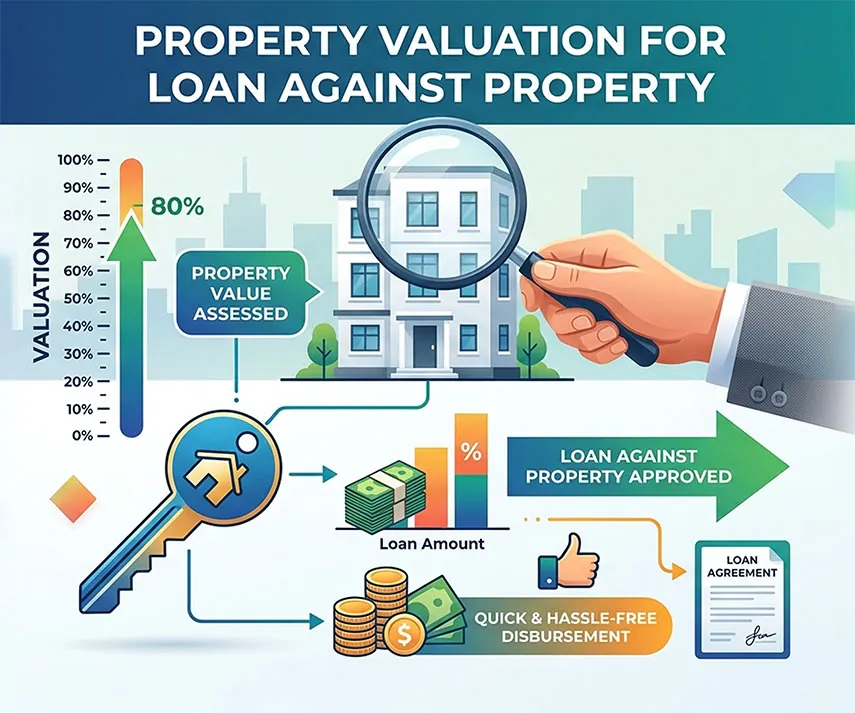
Lenders commonly sanction 50% to 70% of the property's assessed market value, capped by your income and repayment capacity.
Secured Loan: Know the Risk
Your property is pledged as collateral. If you stop paying EMIs, the lender can recover dues by selling it, so borrow only what you can comfortably repay.
Types of Property Lenders Accept
Property types most banks and NBFCs accept as collateral (policies and LTV limits vary by lender)
Residential Property
Self-occupied or rented residential properties
Examples:
- Apartments
- Independent Houses
- Villas
- Builder Floors
Commercial Property
Office spaces, shops, and commercial establishments
Examples:
- Office Buildings
- Retail Shops
- Warehouses
- Showrooms
Industrial Property
Factory buildings, industrial land, and manufacturing units
Examples:
- Factory Buildings
- Industrial Land
- Godowns
- Manufacturing Units
Loan Against Property Eligibility
Criteria lenders typically use (exact rules vary by lender)
Documents Required for Loan Against Property
Documents lenders commonly ask for. Keeping them ready helps avoid delays.
Property Documents
- Property Registration Documents
- Sale Deed
- Property Tax Receipts
- Encumbrance Certificate
- Building Plan Approval
Identity & Address Proof
- Aadhaar Card
- PAN Card
- Voter ID
- Driving License
- Passport
- Utility Bills
Income Proof
- Salary Slips (6 months)
- Form 16
- IT Returns (3 years)
- Bank Statement (6 months)
- Business Registration
Why Use SmartLoanLend Before You Borrow?
Free Calculators
Estimate EMI, total interest and eligibility. Results are estimates, not loan offers.
Plain-Language Guides
Understand LTV, rates, fees and documents before you talk to a lender.
No Sign-Up Needed
No account or phone number required. Our tools run in your browser and we don't collect your personal details.
Compare Total Cost
Look beyond the headline rate: add processing fees, valuation and legal charges before choosing a lender.
Property Loan EMI Calculator
Estimate your monthly EMI. Your actual EMI depends on the rate and terms the lender offers.
EMI Calculation
Frequently Asked Questions
Planning a Loan Against Property?
Estimate your eligibility and EMI first, then compare rates and fees directly with banks and NBFCs.